The Last Resort: Inside the Laboratories Racing to Recover What Magnetic Failure Threatens to Erase Forever
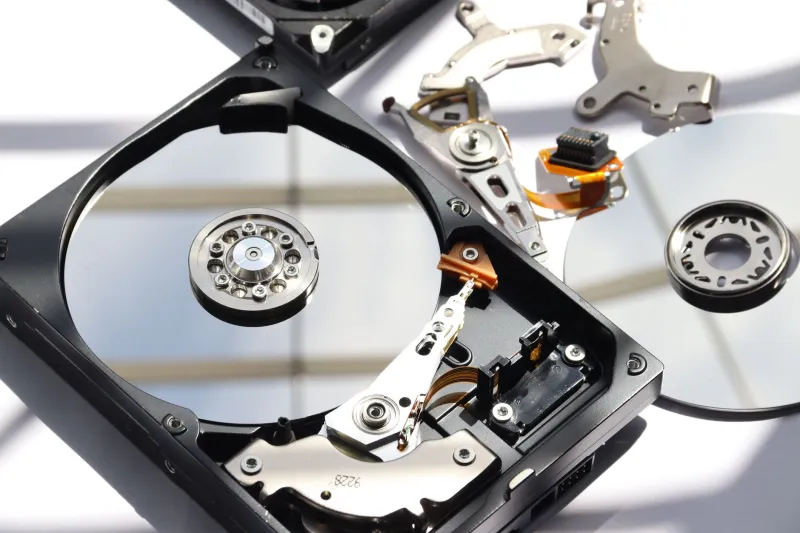
When a hard drive fails, it rarely fails quietly. The symptoms range from the ominous rhythmic clicking of a damaged read/write head to the complete electronic silence of a circuit board that has simply stopped responding. For most users, these sounds mark the end of the road. For a small and specialized community of data recovery technicians working across the United States, they are the opening notes of an investigation.
These professionals operate at the intersection of forensic science, materials engineering, and institutional memory. Their laboratories — many of them modest operations tucked into industrial parks from Raleigh to Sacramento — represent something the broader technology world has been slow to recognize: the last line of defense between irreplaceable digital content and permanent erasure.
Reading the Evidence
Diagnosing a failed magnetic disk drive is, in the words of one veteran recovery specialist, "equal parts chemistry, intuition, and humility." No two failures are identical, and the technician's first task is to construct a precise account of what went wrong before any recovery attempt is made.
Head crashes — instances in which the read/write head makes physical contact with the platter surface — leave behind microscopic evidence that experienced technicians have learned to interpret with considerable precision. Scoring patterns on the platter, debris trails visible under magnification, and the specific acoustic signature recorded during failure can all narrow the diagnostic picture. Circuit board failures present a different challenge: burned components, corrupted firmware, and failed controller chips each demand distinct approaches, and misidentifying the failure mode can transform a recoverable situation into a catastrophic one.
The detective work extends to the platters themselves. Magnetic media degrades according to its own logic, influenced by storage conditions, manufacturing tolerances, and the particular chemistry of the oxide or thin-film coating applied to each disk. Technicians must account for all of these variables before introducing a damaged drive into a cleanroom environment — a space where airborne particulates are controlled to standards that rival semiconductor fabrication facilities.
The Cleanroom and What It Protects
The cleanroom is where the most consequential decisions in data recovery are made. Opening a hard drive outside of such an environment — even briefly — risks contaminating the platter surface with particles that can accelerate damage and render marginally recoverable data permanently inaccessible. The investment required to build and maintain a certified cleanroom is substantial, and it represents one of the primary economic barriers separating professional recovery operations from hobbyist attempts.
Inside the cleanroom, technicians perform procedures that would have seemed extraordinary to the engineers who originally assembled the drives. Platters are transplanted from damaged housings into donor mechanisms with compatible head assemblies. Actuator arms are carefully repositioned. In some cases, platters are removed entirely and read using specialized imaging equipment that bypasses the original mechanical assembly altogether.
The goal throughout is not merely to retrieve files but to reconstruct the logical structure of the data — the file system metadata, the allocation tables, the directory hierarchies — that gives recovered content its meaning and context. Raw magnetic flux patterns are of limited value without the interpretive framework that transforms them into recognizable documents, photographs, or database records.
What Is Actually Being Saved
The content that arrives at data recovery laboratories reflects the full spectrum of American digital life. Family photograph archives spanning decades. Small business accounting records with no offsite backup. Legal documents central to active litigation. Oral history recordings collected by community organizations. Graduate research representing years of fieldwork. Medical imaging data predating widespread electronic health record adoption.
Each of these categories carries its own weight. The loss of a family's photographic archive is a private tragedy; the loss of institutional records can sever communities from their own documented histories. Data recovery specialists frequently describe the emotional dimension of their work — the calls from clients who describe the contents of a failed drive with the specificity of someone recounting a house fire.
From the perspective of magnetic disk heritage, this content represents something equally significant: a documentary record of how Americans lived, worked, and communicated during the decades when magnetic disk storage was the dominant medium for digital information. The drives arriving at recovery laboratories today were manufactured during the period in which hard disk technology reached its commercial apex. They are primary sources, and their contents — if recovered — are historical artifacts.
An Infrastructure Under Pressure
The economic conditions facing data recovery operations in the United States are, by most accounts, increasingly difficult. The consolidation of the storage industry has reduced the availability of compatible donor drives needed for component transplants. Manufacturer firmware is more frequently encrypted or locked, complicating the process of swapping controller boards. The proprietary architectures of modern drives have made certain failure modes effectively unrecoverable without manufacturer cooperation that is rarely forthcoming.
Smaller independent laboratories face particular pressure. The capital requirements for maintaining current cleanroom certifications, acquiring diagnostic equipment, and sustaining an inventory of donor mechanisms are significant. Meanwhile, the consumer market has partially shifted toward solid-state storage, which presents its own — and in some respects more severe — recovery challenges. Several independent recovery operations that served regional markets for decades have closed in recent years, leaving geographic gaps in the recovery infrastructure.
The implications extend beyond individual clients. When a regional recovery laboratory closes, it takes with it institutional knowledge that cannot be easily reconstructed: the accumulated diagnostic experience of technicians who have worked on thousands of specific drive models, the informal networks through which donor components are sourced, and the relationships with archivists and institutional clients who depend on recovery services for preservation work.
The Argument for Preservation
There is a reasonable case to be made that data recovery laboratories constitute cultural infrastructure in the same sense that archives and libraries do. They preserve access to content that exists nowhere else, using specialized skills and equipment that the broader market has limited incentive to sustain. Their work is invisible when it succeeds and irreversible when it fails.
The Magnetic Disk Heritage Center has long argued that the history of magnetic storage technology cannot be understood apart from the human and institutional systems that grew up around it. Data recovery laboratories are a significant part of that system. They represent the accumulated practical knowledge of generations of technicians who learned, often through costly failure, how magnetic media behaves under stress — and how to coax it back into legibility.
The platters these specialists work on carry the material record of the digital age. Preserving the expertise required to read them is not a technical problem alone. It is a question of whether we are willing to invest in the infrastructure that keeps our recent past accessible — or whether we will allow it to degrade, one unrecoverable drive at a time.
