Made in America: The Stubborn Survival of Domestic Hard Drive Manufacturing

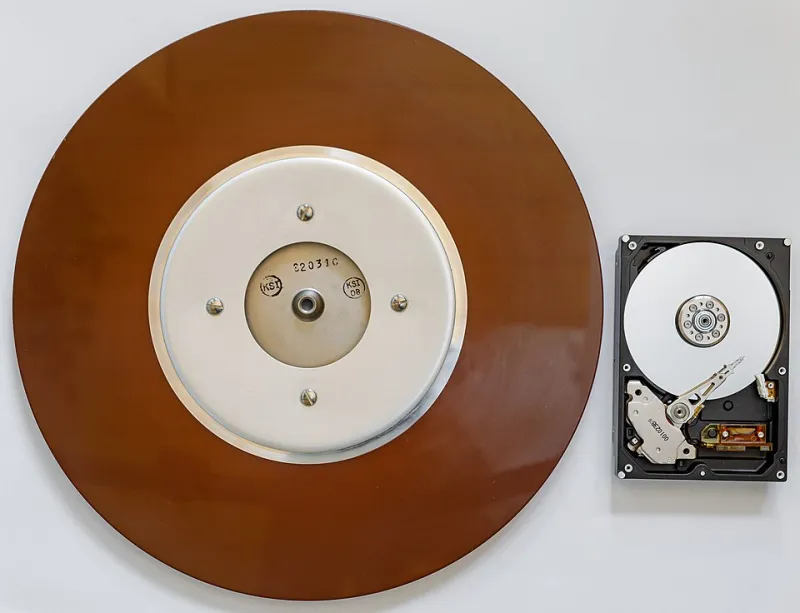
Photo: Q50005, CC BY-SA 4.0, via Wikimedia Commons
For most Americans who came of age during the personal computer era, the hard drive was simply a component — something that arrived inside a beige tower, hummed quietly beneath a desk, and occasionally failed at the worst possible moment. Few paused to consider where it was made. Fewer still would have guessed that by the second decade of the twenty-first century, the answer to that question would carry genuine implications for national security, industrial policy, and the long-term health of American precision manufacturing.
The story of how magnetic disk production left the United States — and why a meaningful portion of it never did — is one of the more instructive episodes in the broader history of domestic technology industry decline.
The Great Migration
The offshoring of hard drive manufacturing did not happen overnight. Through the 1970s and into the 1980s, California's Silicon Valley and the surrounding region served as the undisputed center of disk drive production. Companies such as Seagate, Western Digital, and Quantum assembled their products domestically, drawing on a dense ecosystem of component suppliers, precision machining shops, and a workforce trained in the exacting tolerances that magnetic storage demanded.
By the late 1980s, however, cost pressures were reshaping the industry's geography. Labor-intensive assembly operations began migrating to Singapore, Thailand, and Malaysia — countries that offered substantially lower wages and, crucially, governments willing to invest in the infrastructure and training necessary to support high-precision electronics manufacturing. The transition accelerated through the 1990s. By the turn of the millennium, the overwhelming majority of hard drives sold in the United States were assembled abroad, even when the companies themselves retained American headquarters.
The 2011 flooding of Thailand's industrial heartland — which disrupted global hard drive supply chains for the better part of a year — offered a stark illustration of just how concentrated and vulnerable that offshore production base had become.
What Stayed Behind
And yet, not everything left. Scattered across the American landscape, a handful of manufacturing operations continued producing magnetic storage hardware under conditions that the global commodity market could not easily replicate or undercut.
The most significant driver of domestic retention has been the United States federal government, and specifically its defense and intelligence procurement apparatus. Military and intelligence applications impose requirements that commercial-grade drives — assembled to meet consumer price points — simply cannot satisfy. These include radiation-hardened designs capable of functioning in satellite and aerospace environments, drives engineered to operate across extreme temperature ranges, and hardware manufactured under supply chain documentation protocols stringent enough to satisfy Department of Defense certification standards.
For these customers, the country of origin is not a procurement preference. It is a contractual requirement. The risk of compromised firmware or subtly altered hardware introduced somewhere in a complex international supply chain is treated as an unacceptable vulnerability. Domestic production, with its auditable manufacturing processes and cleared workforce, becomes the only viable option.
The Economics of Precision
Beyond defense contracting, certain commercial applications have also sustained domestic production by demanding performance characteristics that commodity manufacturing struggles to deliver consistently. Medical imaging systems, seismic data acquisition equipment, and high-availability archival storage platforms all represent niches where the cost of a storage failure — measured in lost data, diagnostic error, or regulatory liability — vastly exceeds any savings achieved through offshore sourcing.
Manufacturing magnetic storage hardware to these standards requires not merely capable machinery but an accumulated institutional knowledge that is genuinely difficult to rebuild once dispersed. The engineers and technicians who understand how to hold dimensional tolerances in read/write head assemblies to specifications measured in nanometers, who can diagnose the subtle interactions between platter surface chemistry and head flight characteristics, represent a form of human capital that cannot be conjured quickly from a training manual.
This reality has given some domestic manufacturers a defensible competitive position that has little to do with labor costs. When a single drive failure can ground a defense contractor's certification timeline or corrupt years of scientific field data, procurement decisions shift from price-per-unit to demonstrated reliability — a competition on different terms entirely.
The Supply Chain Argument
The broader argument for maintaining domestic magnetic storage manufacturing capacity has gained new urgency in recent years, as American policymakers have grown increasingly attentive to the strategic vulnerabilities embedded in globally distributed technology supply chains.
The CHIPS and Science Act of 2022, which directed substantial federal investment toward rebuilding domestic semiconductor fabrication capacity, reflected a bipartisan consensus that certain categories of technology manufacturing were simply too strategically important to leave entirely to the logic of comparative advantage. Magnetic disk storage has not attracted the same level of legislative attention as semiconductors, but the underlying argument applies with comparable force. A nation that cannot produce its own high-reliability data storage hardware is a nation that depends on foreign manufacturing for the integrity of its most sensitive information systems.
Some industry observers have argued that the existing cluster of domestic hard drive manufacturers — modest in scale, specialized in application, largely invisible to the consumer market — represents an asset that deserves more deliberate policy support than it has historically received. These facilities preserve not only production capacity but the engineering knowledge and skilled workforce that would be extraordinarily difficult to reconstitute if allowed to atrophy.
The Heritage Dimension
For those of us engaged in documenting and preserving the history of magnetic storage technology, the survival of domestic manufacturing carries a dimension beyond the merely economic or geopolitical. These facilities are living repositories of a manufacturing tradition that stretches back to the magnetic drum and disk technologies of the 1950s — a tradition whose accumulated refinements represent one of the great sustained engineering achievements of the twentieth century.
The precision required to manufacture a modern hard drive platter — the substrate flatness, the magnetic coating uniformity, the surface finish that allows a read/write head to fly at heights measured in nanometers above a spinning disk — did not emerge from a single breakthrough. It accumulated through decades of iterative improvement, each generation of engineers building on the documented and undocumented knowledge of the last.
When a manufacturing facility closes and its workforce disperses, some portion of that knowledge disappears in ways that no technical manual fully captures. The domestic manufacturers who have survived represent continuity with that tradition — a thread connecting the contemporary industry to its origins in the research laboratories and machine shops where magnetic disk storage was invented.
A Quiet Significance
The hard drives produced in American facilities today will not appear on the shelves of consumer electronics retailers. They will not be reviewed by technology journalists or compared in online buyer's guides. They will store satellite telemetry, archival medical records, and classified government data — applications whose requirements justify their cost and whose operators value their provenance.
That quiet significance is, in its own way, an appropriate fate for a technology whose importance has always exceeded its visibility. Magnetic disk storage built the modern information economy largely without public recognition. The facilities that continue producing it on American soil carry that tradition forward — preserving not just a manufacturing capability, but a piece of the industrial heritage that made modern computing possible.