Midnight on the Platter: How Hard Drives Became the Unsung Heroes of the Y2K Crisis
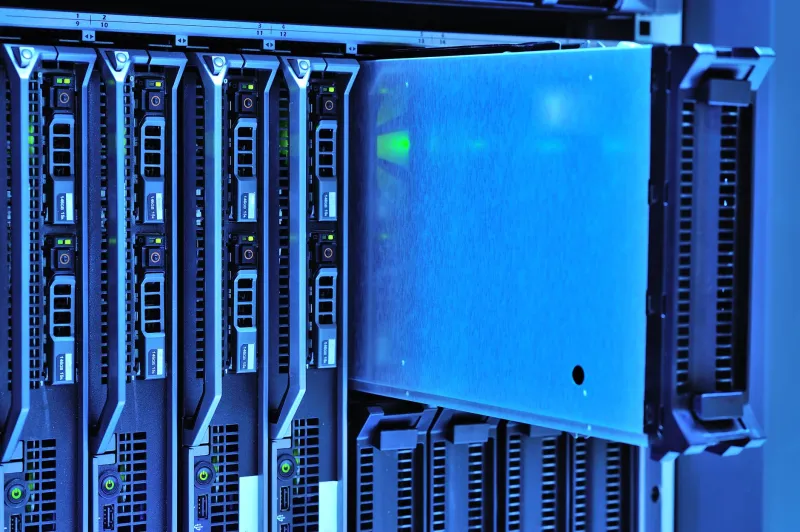
In the closing months of 1999, the offices of America's IT departments looked less like workplaces and more like command centers preparing for siege. Whiteboards filled with inventory lists. Server rooms hummed at capacities they had rarely approached. And beneath it all, spinning at thousands of revolutions per minute, were the magnetic hard drives that would ultimately determine whether the world's data infrastructure survived the calendar's most anticipated transition.
The Year 2000 problem—Y2K, as it entered the cultural lexicon—is remembered today primarily as either a catastrophe that never happened or a mass hysteria that wasted billions of dollars, depending on whom you ask. What that simplified narrative obscures is the enormous, largely invisible role that magnetic disk storage technology played in both the crisis and its resolution. Hard drives were not passive bystanders. They were the terrain on which the battle was fought.
The Certification Scramble
Long before consumers began stockpiling bottled water, storage manufacturers were confronting a technical problem that was more subtle than a simple date-field overflow. The concern was not merely whether a drive's onboard firmware correctly handled the rollover from December 31, 1999 to January 1, 2000. It extended to how drives interacted with operating systems, file allocation tables, and backup software that might themselves misinterpret timestamps—potentially corrupting data silently, without triggering any obvious alarm.
"The drives themselves were generally fine," recalls Raymond Schuster, a storage systems engineer who spent much of 1998 and 1999 conducting Y2K compliance audits for a regional bank in the Midwest. "The problem was the ecosystem. A drive could report a perfectly valid timestamp, and then the software layer above it would misread that timestamp and overwrite something it shouldn't have. We were testing the whole chain, not just individual components."
Manufacturers including Seagate, Western Digital, and Quantum issued formal Y2K compliance statements and, in many cases, firmware updates for drives already deployed in the field. The process was neither simple nor cheap. Engineers had to account for drives spanning multiple product generations, some using proprietary real-time clock implementations that had never been designed with the millennium boundary in mind. The paper trail generated by that certification effort—technical bulletins, firmware revision logs, internal test reports—represents a significant body of primary documentation that the Magnetic Disk Heritage Center continues to collect and catalog.
Storage Under Pressure
Beyond the certification process, the Y2K era placed extraordinary physical demands on magnetic storage infrastructure. Organizations that had historically maintained modest backup regimens suddenly found themselves under regulatory and legal pressure to archive comprehensive snapshots of their data before the rollover. Federal financial regulators, in particular, required banks and brokerages to demonstrate that they could restore their systems to a known-good state if something went wrong at midnight.
The result was a surge in backup activity unlike anything the industry had previously encountered. Tape libraries ran continuously. But hard drives—used as staging areas, as intermediate backup targets, and as the primary storage for the transactional systems being protected—absorbed the brunt of the workload. Drive failure rates during the period are difficult to quantify precisely, because organizations were understandably reluctant to publicize problems. But engineers who lived through the era describe a notable uptick in drive replacements during the second half of 1999.
"We went through more drives in those six months than we had in the previous two years," says Patricia Delacroix, who managed storage infrastructure for a healthcare network in the Southeast during the Y2K preparation period. "We were running these systems at sustained high utilization levels that they simply weren't designed to maintain indefinitely. Some of them gave out. We expected that. We had spares staged."
The practice of pre-positioning spare drives—maintaining on-site inventory of replacement units specifically to manage anticipated failures—became standard operating procedure for large IT organizations during the Y2K preparation window. It was, in microcosm, a demonstration of how dependent the broader economy had become on the reliable operation of magnetic disk storage.
What the Drives Remembered
The most historically significant chapter of the Y2K storage story may be one that unfolded years after the crisis itself. As organizations gradually decommissioned the servers that had carried them through the millennium transition, the drives from those systems began surfacing in secondary markets, in storage closets, and occasionally in the hands of collectors and preservationists.
Some of those drives, it turned out, contained something invaluable: intact filesystem metadata from the rollover period itself. Timestamp records, transaction logs, and system event files preserved on magnetic platters offered forensic evidence of exactly how various software environments had handled the date transition. For engineers willing to invest the time in careful recovery and analysis, those drives became primary historical sources.
"A drive that was in active service on January 1, 2000 and then sat in a box for fifteen years is essentially a time capsule," observes Dr. Carol Fenwick, a digital preservation specialist who has studied Y2K-era storage systems. "The magnetic residue doesn't care about the mythology that built up around the event afterward. It just records what actually happened."
What the surviving drives tend to show, according to those who have examined them, is a picture more nuanced than either the doomsayers or the debunkers anticipated. Most systems handled the rollover without incident. A meaningful minority experienced exactly the kind of subtle timestamp anomalies that engineers had feared—errors that were caught and corrected precisely because organizations had invested so heavily in monitoring and contingency planning. The preparation, in other words, largely worked. The drives survived because people had taken extraordinary care to ensure that they would.
A Legacy Written in Magnetic Oxide
The Y2K crisis occupies an awkward place in American technological memory. It is difficult to celebrate the prevention of a disaster that, by definition, left little visible evidence of what might have been. The engineers and IT professionals who spent years preparing for the millennium transition rarely received the recognition that their counterparts in more visible technical fields might have expected. And the magnetic drives that served as the physical substrate for all of that preparation have been quietly discarded, recycled, or forgotten.
Preserving the documentary record of that era—the compliance certifications, the firmware updates, the failure analyses, the operational logs—is among the more urgent tasks facing institutions committed to the history of storage technology. The drives that survived Y2K are not merely antique hardware. They are witnesses to one of the defining episodes in the history of computing's relationship with time itself.
The Magnetic Disk Heritage Center actively solicits donations of Y2K-era storage hardware, manufacturer technical documentation, and firsthand accounts from engineers who managed storage infrastructure during the 1998–2001 period. If you worked in IT storage during the millennium transition, your experience is part of the record we are working to preserve.