Infrastructure as Oracle: How Hard Drive Failures Foretold the Collapse of Corporate America's Digital Empires

Before the press releases, the bankruptcy filings, and the postmortems, something quieter was already failing inside the data centers of companies on the brink. An examination of magnetic disk failure patterns from the 1990s and 2000s reveals a striking correlation: deteriorating storage infrastructure frequently preceded — and in some cases predicted — the public unraveling of major American corporations. For technology historians and archivists, this relationship between physical media degradation and institutional collapse offers a sobering lesson about what magnetic platters can tell us when no one is listening.
The Body Language of a Dying Organization
Corporate failure rarely arrives without warning. Financial analysts hunt for signals in quarterly earnings; journalists cultivate sources inside boardrooms. But there is another category of warning signal that has received far less scholarly attention — one embedded not in spreadsheets or leaked memos, but in the error logs and failure rates of spinning magnetic disks.
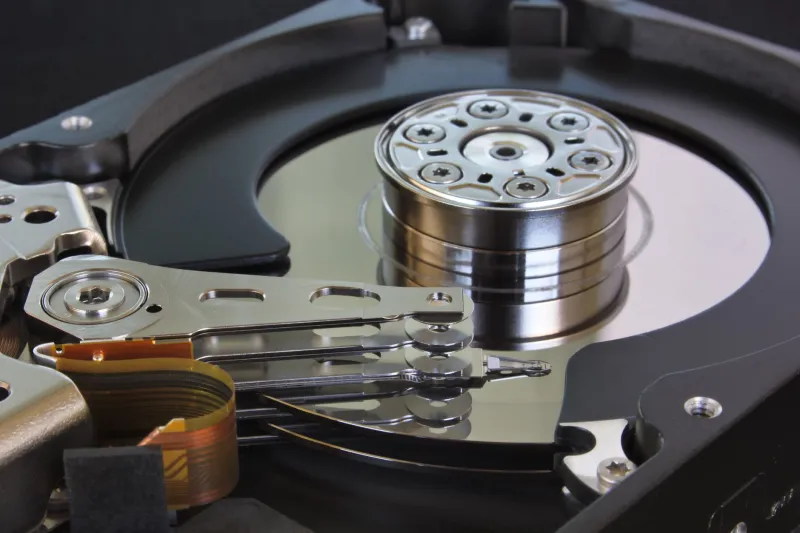
The hard drives housed in corporate data centers during the dot-com era were, in a very literal sense, the nervous systems of the companies they served. Customer records, transaction histories, internal communications, and proprietary code all resided on magnetic platters rotating at thousands of revolutions per minute. When those platters began to fail with unusual frequency, the causes were rarely random. They reflected decisions — about capital allocation, maintenance schedules, IT staffing, and organizational priorities — that also tended to manifest elsewhere as corporate dysfunction.
Put simply: companies that were quietly disintegrating often stopped taking care of their infrastructure first.
The Dot-Com Laboratories of Neglect
The years between 1998 and 2002 constitute one of the richest case study periods in the history of corporate data center management — or, more precisely, mismanagement. During the dot-com boom, venture capital flooded into companies whose technical ambitions vastly outpaced their operational discipline. Server farms expanded rapidly, often assembled from consumer-grade components pressed into enterprise service. Magnetic disk arrays were stacked in facilities with inadequate cooling, inconsistent power conditioning, and minimal redundancy planning.
When the market correction arrived in 2000 and 2001, the consequences for storage infrastructure were immediate and revealing. Companies that had been quietly burning through cash began deferring hardware maintenance. Drive replacement cycles, which responsible IT departments managed on predictable schedules, were extended indefinitely. RAID arrays that should have been rebuilt after individual disk failures were left running in degraded states — a practice that dramatically increased the probability of catastrophic data loss.
For the technology historians who have since examined the operational records of failed dot-com enterprises, a pattern emerges with uncomfortable clarity. In multiple documented cases, the rate of unaddressed disk failures inside a company's data center began climbing six to eighteen months before the organization's financial distress became public knowledge. The platters were failing; the companies simply lacked the resources — or the will — to respond.
Enron's Quiet Infrastructure Crisis
Among the most consequential corporate collapses of the early 2000s, Enron Corporation occupies a singular position. The Houston-based energy trading giant's implosion in late 2001 has been exhaustively analyzed through the lens of accounting fraud and executive malfeasance. Less examined is the state of the company's information technology infrastructure in the months preceding its bankruptcy filing.
Post-collapse forensic investigations — some conducted under federal subpoena — required recovery specialists to contend with storage systems that were in a markedly deteriorated condition. Investigators encountered magnetic media that had been inadequately maintained, with failure rates and unresolved error conditions that suggested prolonged neglect. Whether this neglect was incidental to the broader organizational chaos or represented deliberate obstruction remains a matter of historical interpretation. What is not in dispute is that the physical condition of Enron's storage infrastructure told a story of institutional breakdown that predated the public revelations of December 2001.
Data recovery specialists who worked on Enron-related evidence have described, in various professional contexts, the challenges posed by drives that had been run far past their reliable service windows without replacement or remediation. The platters, in their degraded state, were a physical record of an organization that had stopped functioning as a responsible institution long before the world knew it.
The Retail Sector and the Disk Failure Curve
The relationship between infrastructure neglect and corporate decline was not confined to the technology sector. During the extended retail apocalypse that accelerated through the 2000s and into the 2010s, a number of major American retail chains exhibited similar patterns. Companies that were losing the structural battle against changing consumer behavior and overleveraged balance sheets frequently deferred technology investment — including storage infrastructure maintenance — as a cost-cutting measure.
Retail data centers of the period relied heavily on magnetic disk arrays for point-of-sale transaction records, inventory management systems, and customer loyalty databases. When organizations began quietly rationing capital, IT departments were among the first to absorb cuts. Drive replacement programs were suspended. Legacy arrays, some running hardware that dated to the mid-1990s, were kept in service well beyond any reasonable operational horizon.
For the archivists and historians who have subsequently attempted to recover the operational records of defunct retail chains, this deferred maintenance has created significant preservation challenges. Magnetic media that was already aged and stressed at the time of a company's closure has, in many cases, deteriorated further in the years since. The historical record of these organizations — their pricing strategies, their supplier relationships, their customer data — exists in a state of fragility that directly reflects the financial fragility of the institutions that created it.
What the Failure Logs Tell Us
The historiographical implications of this pattern are significant for anyone engaged in the preservation of corporate and technological history. If disk failure rates function as a leading indicator of organizational distress, then the operational logs of corporate data centers — where they can be recovered and interpreted — represent a category of primary historical evidence that has been substantially underutilized.
This is, admittedly, a difficult archive to work with. Drive error logs are technical documents that require specialized knowledge to interpret. They are rarely preserved as part of standard corporate recordkeeping. And the organizations most likely to have exhibited the failure patterns described here are also, by definition, the organizations least likely to have maintained disciplined archival practices.
Nevertheless, the principle holds. The magnetic platter, in its physical condition and its operational history, carries information about the institution it served that extends well beyond the data encoded on its surface. The rate at which sectors failed, the frequency with which error correction was invoked, the decisions made — or not made — about replacement and remediation: all of these constitute a form of institutional biography written in the language of physical degradation.
Preservation as Historical Responsibility
For the Magnetic Disk Heritage Center, this history carries a direct and urgent implication. The work of recovering and preserving magnetic media from defunct American corporations is not merely a technical exercise. It is an act of historical recovery that operates on multiple levels simultaneously — rescuing the data encoded on the platters, yes, but also reading the condition of the platters themselves as evidence of the organizations that created them.
The hard drives that survived the collapse of dot-com enterprises, energy trading conglomerates, and retail chains are artifacts in the fullest sense of that word. They bear the marks of the decisions made by the people and institutions responsible for them. In their degradation, they preserve a record of neglect, of deferred responsibility, and of the quiet ways that large organizations begin to fail long before the failure becomes visible.
The platter, it turns out, does not merely store history. It enacts it.