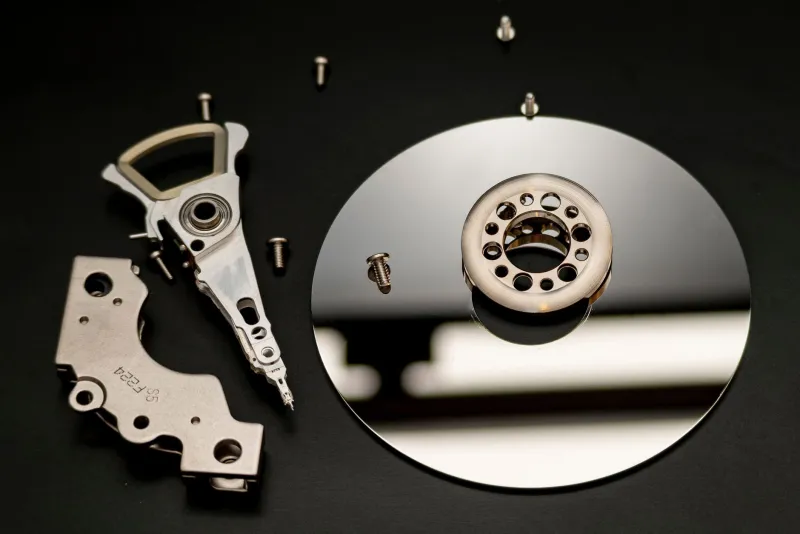
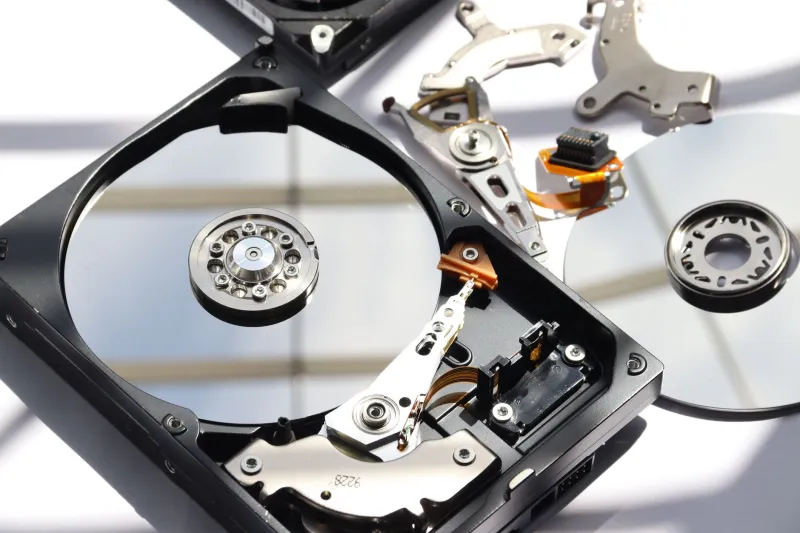
Precision and Patience: The Independent Craftspeople Breathing New Life Into Magnetic Disk Storage
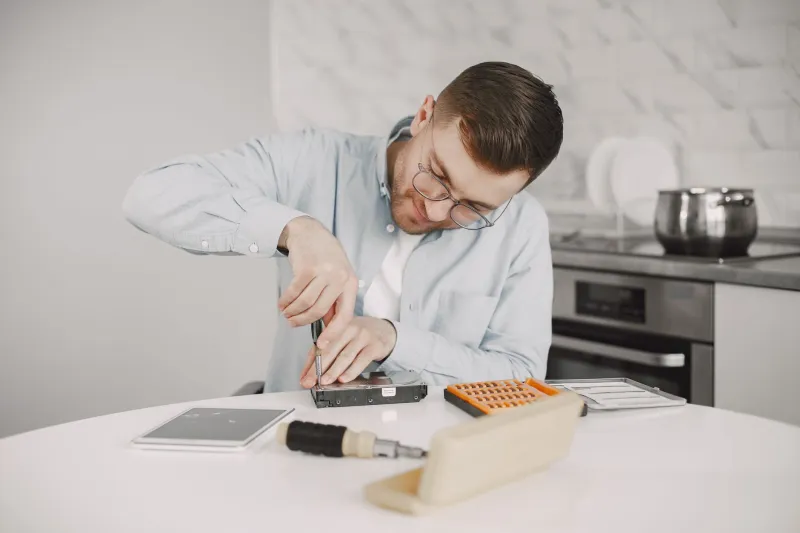
In a converted garage in Tucson, Arizona, a former aerospace engineer named Gerald Marsh spends his afternoons hunched over a laminar flow bench, coaxing magnetic platters back from what most technicians would call the point of no return. The drives arrayed before him represent decades of accumulated human experience: a 1987 MFM drive from a defunct architectural firm, a mid-1990s SCSI array that once housed a regional hospital's patient scheduling system, and a shoebox of 3.5-inch disks belonging to a woman in her seventies who believes her late husband's unpublished manuscript resides somewhere within them.
Marsh is not affiliated with any of the major data recovery firms that advertise nationally. He charges modest fees, keeps irregular hours, and accepts cases that larger commercial operations decline as economically unviable. He is, in the informal parlance of the field, a platter whisperer — one of perhaps a few hundred such individuals operating across the country, each possessing a distinct combination of technical knowledge, historical awareness, and almost stubborn optimism about what can be salvaged from seemingly ruined magnetic media.
A Craft Without a Guild
There is no formal certification for magnetic disk restoration at the artisanal level. No trade association issues credentials, and no academic program awards degrees in the discipline. What these practitioners share is a body of knowledge assembled through years of hands-on experimentation, correspondence with fellow enthusiasts, and a willingness to dismantle drives that most professionals would simply invoice as unrecoverable.
Many entered the field through adjacent disciplines. Some came from electronics repair, others from computer science programs that still emphasized hardware fundamentals. A notable subset arrived via the vintage computing hobby community, where the desire to run original software on original machines naturally led to confronting the problem of aging, failing storage media. Whatever their origin, they tend to describe their work in terms that blend the clinical and the reverential — an acknowledgment that the platters they handle carry more than mere data.
"Every drive that comes through here represents a moment in time that someone thought was worth keeping," says Marsh. "That's not nothing. That's actually everything."
The Technical Landscape
Commercial data recovery services operate within a framework defined by cost-benefit analysis. A drive whose recovery would require forty hours of labor to yield a modest fee will typically be declined or returned with a discouraging estimate. This economic reality creates a substantial gap in the recovery ecosystem — one that independent restoration specialists have moved to fill.
The techniques employed by these craftspeople vary considerably depending on the era and format of the media in question. For drives suffering from stiction — a condition in which the read-write heads adhere to the platter surface after a period of inactivity — some practitioners employ a carefully controlled application of rotational force, a maneuver that requires intimate familiarity with the specific drive model's mechanical tolerances. Others have developed proprietary cleaning protocols using reagents sourced from photographic conservation suppliers, applying methods originally designed for film preservation to the rather different challenge of oxide-coated aluminum or glass substrates.
Head realignment represents perhaps the most demanding of the craft's core competencies. In drives where the actuator assembly has drifted from its factory calibration — a common consequence of thermal cycling, physical shock, or simple age — the heads must be repositioned with sub-micron precision before any meaningful read operation can occur. Accomplished practitioners accomplish this through a combination of purpose-built diagnostic software, salvaged alignment tools from the original manufacturing era, and a tactile sensitivity that resists easy quantification.
The Historical Preservation Dimension
What distinguishes the most thoughtful practitioners in this field from simple repair technicians is their orientation toward preservation as a primary value. Several independent restorers have established formal working relationships with vintage computer museums and regional historical societies, accepting donations of failed media and treating their recovery work as an extension of the archival mission.
The Computer History Museum in Mountain View, California, has long acknowledged the importance of media recovery to its collections work. But smaller institutions — state history centers, university special collections departments, corporate archives — often lack the internal expertise to assess or address failing magnetic storage. Independent restoration specialists have increasingly stepped into this advisory role, conducting condition assessments and prioritizing recovery efforts based on historical significance rather than commercial value.
The documentation practices of the more rigorous practitioners reflect this archival sensibility. Before any intervention, they photograph the drive's external condition, record its model and serial number, and research its production history. After recovery, they produce detailed reports describing the techniques employed, the condition of the media, and any anomalies observed during the process. This documentation creates a record that future historians may find as valuable as the recovered data itself.
The Personal Archives Problem
Not all of the work arriving on independent restorers' benches carries institutional significance. A substantial portion of their caseload consists of personal archives: family photographs stored on early digital cameras' removable media, home videos captured to early consumer hard drives, business records from sole proprietorships that long ago dissolved. These materials hold no particular importance to the broader historical record, yet their loss would be genuinely devastating to the individuals who entrusted them to magnetic storage.
The emotional weight of this work is something practitioners discuss with notable candor. Marsh describes receiving a package containing three hard drives removed from a deceased photographer's studio, accompanied by a handwritten note from the photographer's adult daughter explaining that the drives likely contained the only surviving copies of her father's complete portfolio. "That note sat on my bench the entire time I worked on those drives," he says. "Fourteen days. I got two of the three drives to yield something. The third one I still think about."
Knowledge Transfer and the Question of Continuity
One concern that runs through conversations with practitioners in this field is the question of how their accumulated expertise will be transmitted to the next generation. Much of what experienced restorers know exists only in informal notes, personal correspondence, and the embodied knowledge that comes from years of hands-on work. No comprehensive technical literature covers the full range of restoration techniques applicable to the broad historical span of magnetic disk formats.
Some practitioners have begun documenting their methods more systematically, publishing detailed procedural guides through online communities dedicated to vintage computing and data recovery. Others have taken on apprentices in informal arrangements that echo the traditional craft guild model. The Magnetic Disk Heritage Center has actively encouraged these documentation efforts, recognizing that the preservation of restoration knowledge is itself a form of historical preservation.
The platters these craftspeople tend hold the accumulated record of American computing's formative decades. The techniques required to read them represent an equally irreplaceable form of knowledge — one that deserves the same careful stewardship as the media it serves.