Iron Curtain, Spinning Platters: The Secret Race to Control Soviet Magnetic Storage
In the popular imagination of the Cold War, the great technological rivalries involved rockets, satellites, and nuclear warheads. Yet buried within the declassified archives of the National Security Agency and the Central Intelligence Agency lies a parallel contest — quieter, more technical, and in many respects more consequential to the eventual outcome of the superpower struggle. That contest was fought over magnetic disk storage, and it shaped the computational destinies of both the United States and the Soviet Union in ways that historians are only beginning to fully appreciate.
A Technology Born Behind Closed Doors
The Soviet Union's engagement with magnetic disk storage began in earnest during the late 1950s, roughly contemporaneous with IBM's landmark introduction of the 305 RAMAC in the United States. Soviet engineers at institutions such as the Moscow-based Scientific Research Institute of Electronic Mathematical Machines — known by its Russian acronym NIIEM — were tasked with developing indigenous storage solutions capable of supporting the USSR's growing computational ambitions. The results were machines like the ES EVM series disk units, components of the Unified System of Electronic Computers that the Soviets developed in collaboration with Eastern Bloc partners throughout the 1960s and 1970s.
What distinguished Soviet magnetic disk development was not merely its technical character but its institutional secrecy. Research was conducted within closed scientific cities, published findings were heavily redacted, and hardware prototypes were classified at levels that made Western analysis extraordinarily difficult. American intelligence analysts who studied Soviet computing during this period have since described the effort to assess Soviet disk storage capabilities as among the most frustrating assignments of their careers.
The Espionage Dimension
Frustration bred ingenuity — and, at times, lawbreaking. Declassified CIA records from the 1970s and 1980s document sustained efforts to acquire Soviet magnetic storage hardware through a variety of channels, some straightforward and others considerably less so. Trade exhibitions in Vienna and Helsinki occasionally provided opportunities for Western technical observers to photograph or handle Soviet disk equipment. Academic exchange programs, though heavily monitored by the KGB, sometimes yielded informal conversations between engineers that proved illuminating.
More dramatically, declassified documents confirm that Western intelligence services actively recruited Soviet scientists with knowledge of magnetic storage systems. The names of individuals involved remain largely redacted, but the operational outlines are clear: the United States and its allies regarded Soviet disk technology as a genuine intelligence priority, not merely a curiosity.
The espionage ran in both directions. Soviet intelligence operations targeting American disk storage manufacturers were extensive and, by some accounts, remarkably successful. The Ryad computer series — the USSR's primary mainframe platform from the early 1970s onward — incorporated architectural elements that bore unmistakable similarities to IBM's System/360 and System/370 designs. American counterintelligence officials and corporate security personnel at firms including IBM, Control Data Corporation, and Digital Equipment Corporation spent considerable resources attempting to identify and close the channels through which Soviet agents were acquiring Western technical documentation and, in some cases, physical hardware components.
Control Data Corporation's legal battles with IBM during the early 1970s inadvertently complicated this picture. The discovery process in that litigation produced detailed technical disclosures that, according to subsequent congressional testimony, were of significant interest to Soviet intelligence gatherers operating in the United States at the time.
What the Hardware Reveals
For those engaged in the preservation of computing history, the physical artifacts of Soviet magnetic disk development present both an extraordinary opportunity and a formidable challenge. Surviving examples of ES EVM disk storage units are rare in American collections, though several European computer museums — particularly in Germany, the Czech Republic, and Poland — hold specimens that were preserved following the dissolution of the Eastern Bloc's shared computing infrastructure.
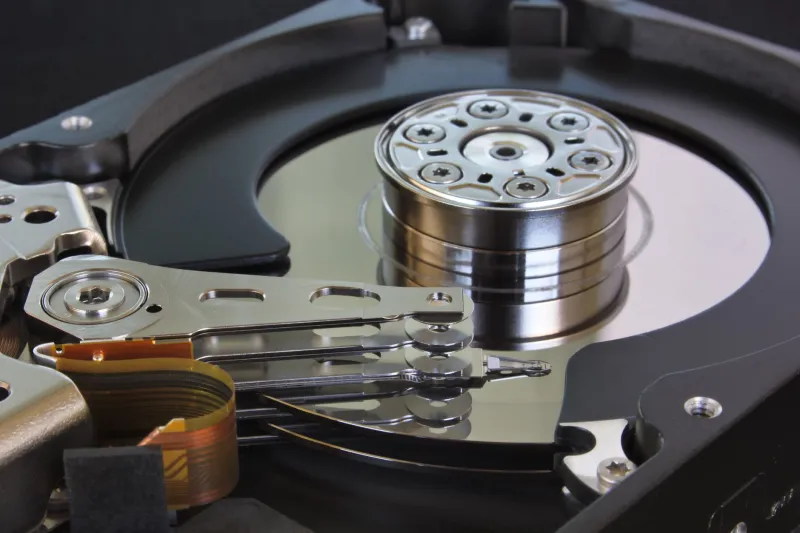
Engineers who have examined these machines describe a technology that was simultaneously sophisticated and constrained. Soviet disk platters were manufactured to tolerances that, while not matching the finest American products of the same era, were considerably more precise than Western analysts had assumed during the Cold War itself. The read/write head assemblies on some units displayed genuine engineering creativity, reflecting the ingenuity that Soviet engineers applied when Western components were unavailable and domestic alternatives had to be designed from first principles.
At the same time, the machines bore clear evidence of the resource limitations that plagued Soviet industry. Coating uniformity on magnetic platters was often inconsistent, contributing to reliability problems that Soviet operators documented extensively in internal maintenance records — records that have since become valuable primary sources for historians attempting to reconstruct the operational realities of Soviet computing.
After the Wall Fell
The collapse of the Soviet Union in 1991 created circumstances that were simultaneously tragic for preservation and revealing for history. Research institutes were shuttered, their contents dispersed or destroyed. Hardware that had been classified for decades was suddenly unguarded, and much of it was scrapped for metal value before any systematic preservation effort could be mounted. Engineers who had devoted careers to magnetic storage development found themselves unemployed, their expertise suddenly without institutional home.
Some of those engineers emigrated. A portion came to the United States, where several joined American disk drive companies during the industry's expansion phase of the 1990s. Interviews conducted over the past two decades with former Soviet magnetic storage engineers — now retired and, in most cases, willing to speak candidly — have added substantial texture to the historical record. Their accounts describe a research culture that was simultaneously isolated from and acutely aware of Western developments, sustained by a combination of genuine scientific pride and the perpetual anxiety of working within a system that punished failure harshly.
Preserving a Contested Legacy
For the Magnetic Disk Heritage Center, the history of Soviet magnetic storage represents an important and underserved chapter in the global story of this technology. The Cold War did not merely accelerate American disk drive development — it shaped the entire international ecosystem within which that development occurred, creating competitive pressures, intelligence priorities, and technological transfer patterns whose effects persisted long after the geopolitical conflict that produced them had ended.
Efforts to document this history face genuine obstacles. Relevant archives in Russia remain largely inaccessible to Western researchers. Physical hardware is scarce and scattered. Many of the engineers with firsthand knowledge are elderly, and the window for oral history collection is closing.
Yet the effort is worth making. Magnetic disk storage was never merely an American story. It was a global technology shaped by global forces — including the profound and sometimes dangerous competition that defined the middle decades of the twentieth century. Understanding that fuller history is essential to understanding the technology itself, and to preserving an honest account of how the digital world came to be built.